
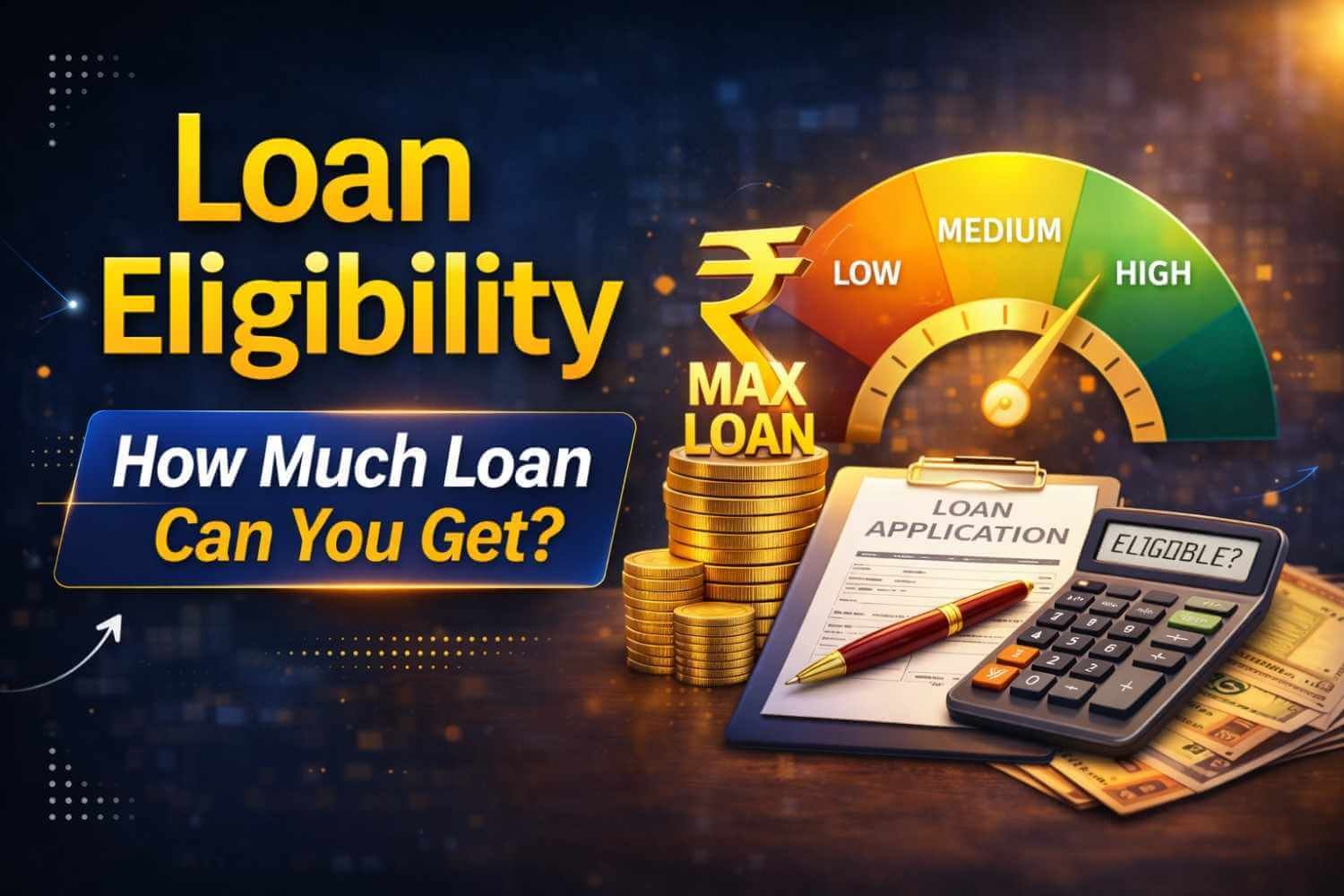
Loan eligibility determines how much money a bank or NBFC will lend you. Understanding the factors can help you maximize your loan amount.
What is Loan Eligibility?
Loan eligibility is the maximum loan amount a lender is willing to give you based on your income, expenses, credit score, and other factors.
Key Factors Affecting Loan Eligibility
1. Income (Monthly/Annual)
Higher income = Higher loan eligibility. Lenders typically allow EMI up to 40-50% of your monthly income (FOIR - Fixed Obligation to Income Ratio).
FOIR Formula: FOIR = (Existing EMIs + Proposed EMI) / Monthly Income × 100
Ideal FOIR: ≤ 50%
2. Credit Score (CIBIL Score)
- 750+: Excellent - Best interest rates, high eligibility
- 700-749: Good - Standard rates
- 650-699: Fair - May get loan with higher rate
- Below 650: Poor - Loan may be rejected
3. Age
- Salaried: 21-58 years (retirement age matters)
- Self-employed: 25-65 years
- Younger age = longer tenure = higher eligibility
4. Existing EMIs / Obligations
Existing loans reduce your eligibility. Credit card outstanding also considered (usually 3-5% of limit as monthly obligation).
5. Loan Tenure
Longer tenure = Lower EMI = Higher eligibility (but more interest paid)
6. Employment Type
- Salaried in MNC/Govt: Higher eligibility
- Self-employed with ITR: Good eligibility
- Contractual/new job: May get lower eligibility
Loan Eligibility Calculation Example
Person Details:
- Monthly Income: ₹80,000
- Existing EMI: ₹10,000
- Loan Tenure: 20 years (240 months)
- Interest Rate: 8.5%
- FOIR Limit: 50%
Calculation:
- Max EMI = (50% × 80,000) - 10,000 = 40,000 - 10,000 = ₹30,000
- For ₹30,000 EMI @ 8.5% for 20 years
- Loan Eligibility ≈ ₹35 Lakhs
Check Your Loan Eligibility
Use our free Loan Eligibility Calculator for instant results.
Calculate NowTips to Improve Loan Eligibility
1. Improve Credit Score
- Pay all EMIs and credit cards on time
- Keep credit utilization below 30%
- Don't apply for multiple loans simultaneously
- Check CIBIL report for errors
2. Reduce Existing Debt
- Close small-ticket loans
- Prepay high-interest debt
- Avoid new loans before applying
3. Add Co-applicant
- Add spouse/parents with income
- Increases total household income
- Common for home loans
4. Increase Tenure
- Longer tenure = Lower EMI = Higher eligibility
- Can prepay later when income increases
5. Show Additional Income
- Rental income
- Bonus/incentives (average of last 3 years)
- Freelance/part-time income (if regular)
- Spouse's income
6. Choose Right Lender
- Some banks offer higher eligibility (e.g., SBI MaxGain)
- NBFCs may have flexible criteria
- Compare multiple lenders
Loan Type Specific Factors
Home Loan
- Property value matters (usually 80-90% LTV)
- Long tenure (up to 30 years)
- Co-applicant recommended
- Age: Up to 70 years at maturity
Car Loan
- LTV up to 90-100% of on-road price
- Tenure: Up to 7 years
- Age: Up to 65 years at maturity
Personal Loan
- Unsecured - stricter eligibility
- Credit score very important (750+)
- Tenure: Up to 5 years
- Higher interest rates
Documents Required
- Identity Proof (Aadhar, PAN, Passport)
- Address Proof
- Income Proof (Salary slips, ITR, Bank statements)
- Employment Proof (Offer letter, ID card)
- Property documents (for home loan)
Common Mistakes to Avoid
- ❌ Applying to multiple lenders (hurts credit score)
- ❌ Not checking credit score beforehand
- ❌ Hiding existing loans
- ❌ Choosing too short tenure
- ❌ Not comparing interest rates
FAQs
Q: What is the minimum CIBIL score for loan?
A: 750+ is ideal. Some lenders may consider 700-749 with higher rate.
Q: Can I get loan with low CIBIL score?
A: Yes, from NBFCs or against security (FD, property), but at higher rates.
Q: How is home loan eligibility calculated?
A: Based on income, age, existing EMIs, property value, and co-applicant income.
Q: Does adding co-applicant double eligibility?
A: Not exactly double, but increases significantly based on co-applicant's income.
Q: Can I prepay loan to improve eligibility?
A: Yes, prepaying existing loans reduces FOIR and increases eligibility for new loan.